2026 Anti-Counterfeiting Trends: From Physical to Digital
- Share
- publisher
- Fiona Mai
- Issue Time
- Oct 10,2026
Summary
A 2026 year-end outlook: anti-counterfeiting finished its move from the print shop to the cloud, keeping a physical layer while adding a digital identity. Covers OECD/EUIPO data, phygital security, GS1 Digital Link, cryptographic codes, blockchain, AI, and regulation.

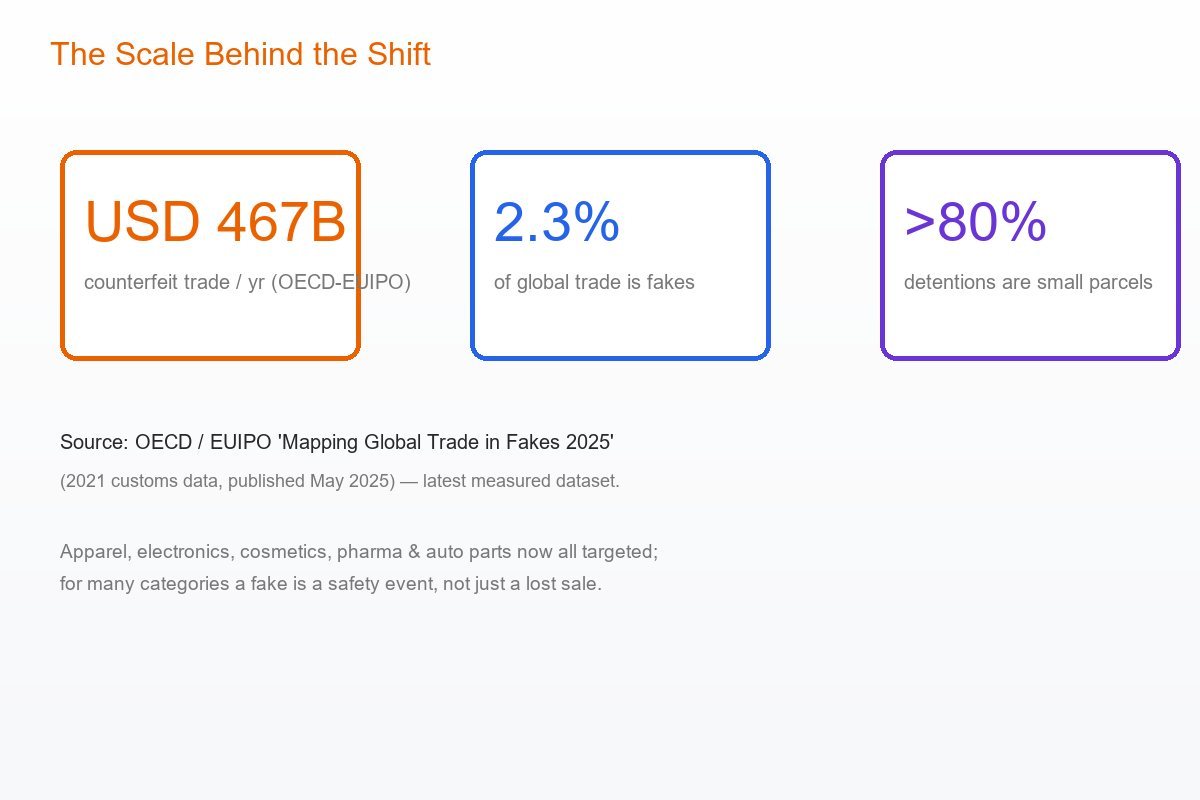
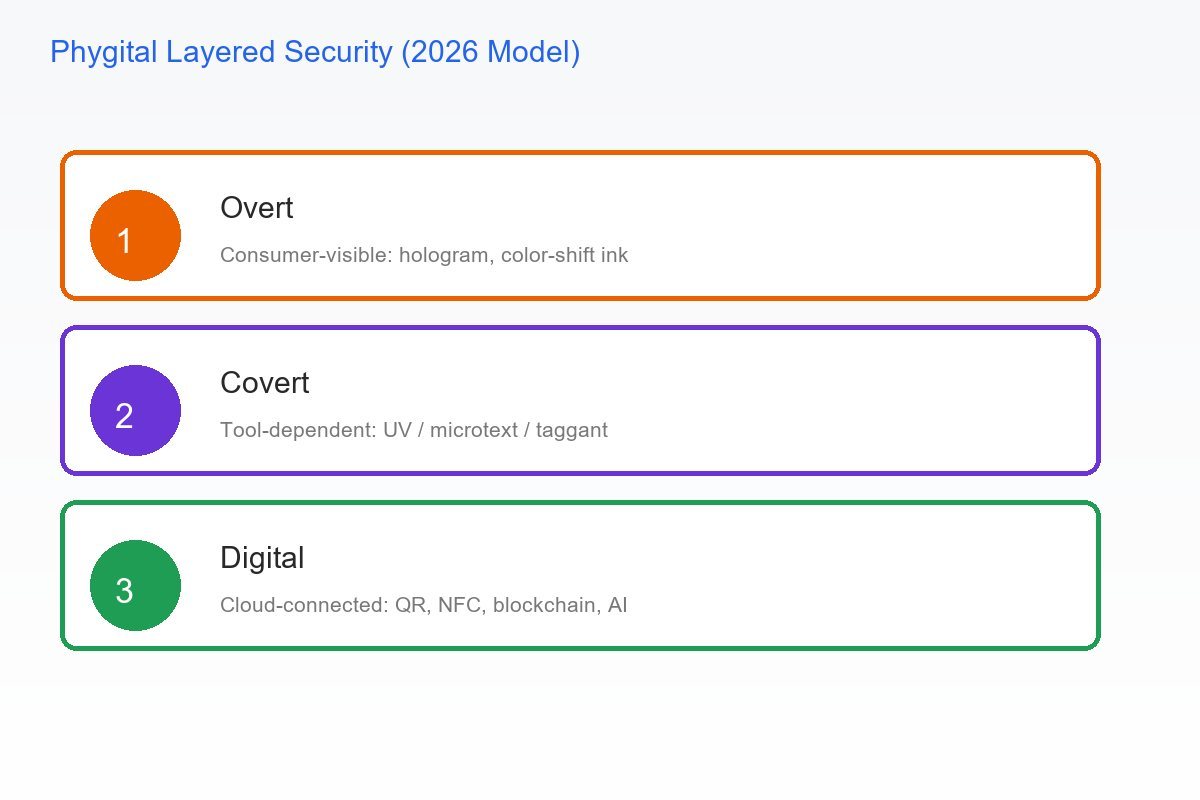
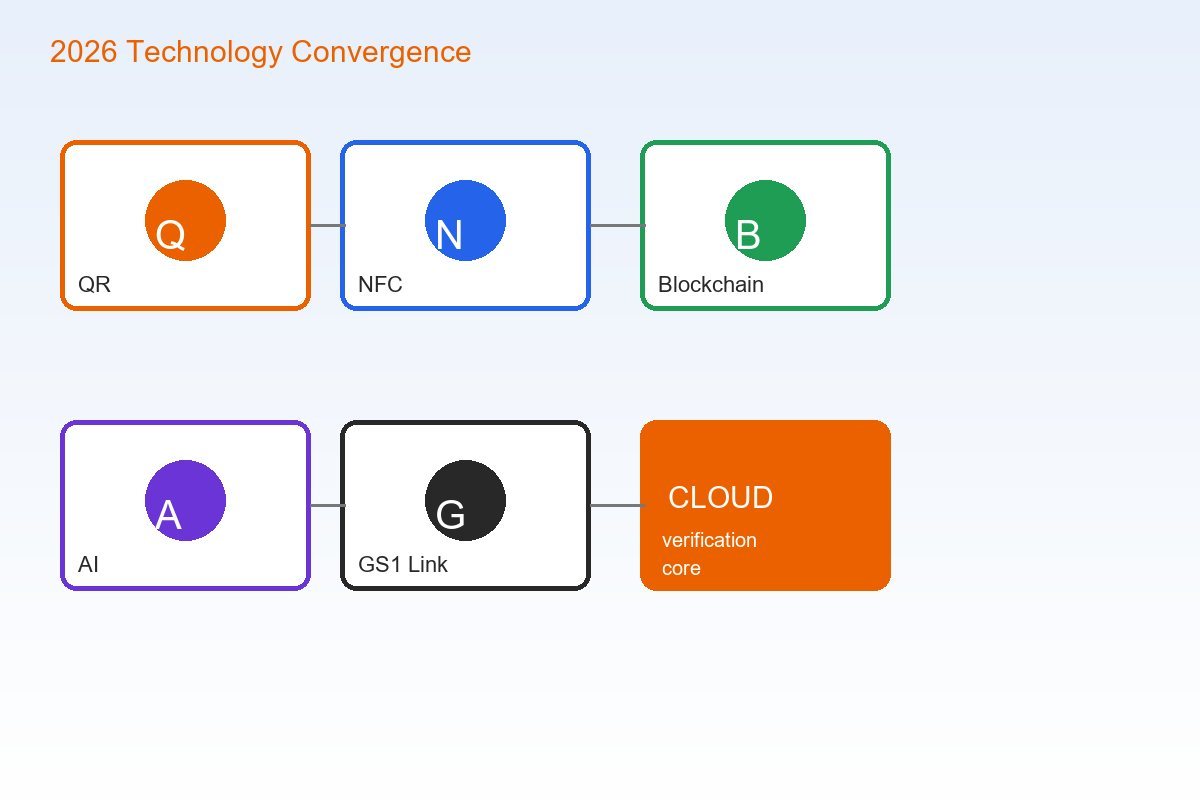
QSDEFENDER Newsroom · Published 2026-10-10 · 2026 Year-End Outlook · Industry Analysis Sources: OECD / EUIPO "Mapping Global Trade in Fakes 2025" (May 2025); OECD/EUIPO "From Fakes to Forced Labour" (Jan 2026); GS1 Digital Link; ASPA Global; GEP Research anti-counterfeit packaging market report 2026. All external figures attributed to their publishers. The story of anti-counterfeiting in 2026 is a story of migration. For decades, brand protection meant a fight fought in the physical world — holograms, color-shift inks, tamper-evident VOID films, and guilloché printing that were hard to copy by hand. In 2026 those features have not disappeared; they have become the visible half of a system whose other half now lives in the cloud. This outlook looks at how physical security and digital intelligence converged this year, what the numbers say, and what brand owners should do before 2027. The one-line summary: the winning 2026 architecture is "phygital" — a verifiable physical feature on the pack, a unique digital identity behind it, and an authentication verdict resolved server-side. No single feature stops a modern counterfeiter; the combination does. Any outlook has to start with scale, because scale is what justifies the investment. The most recent measured dataset — the OECD / EUIPO "Mapping Global Trade in Fakes 2025", published in May 2025 and built on 2021 customs seizure records — estimates that counterfeit and pirated goods were worth about USD 467 billion, or 2.3% of global trade. A companion OECD/EUIPO report, "From Fakes to Forced Labour" (January 2026), extended the analysis to show how illicit trade correlates with labour exploitation in source and transit markets. Two patterns from that data matter for 2026 technology choices: Honest boundaries: the USD 467 billion and 2.3% figures are OECD/EUIPO estimates from 2021 customs data, published May 2025 — the latest measured dataset as of late 2026, not a 2026 observation. They describe seized goods, which understate total illicit trade. We cite them as context, not as a real-time reading. The clearest trend of 2026 is the abandonment of single-feature security. ASPA Global and packaging engineers now describe authentication as converging "physical + digital" — a "phygital" stack with at least three layers: This is exactly the logic behind our hologram + QR hybrid label architecture and our hologram layered (public / covert / forensic) guide: a counterfeiter must replicate all three layers at once to produce a convincing fake, which pushes the cost and complexity past economic viability. The smartphone is now the universal verifier, and the standard catching up to that reality is GS1 Digital Link. Where a legacy 1D barcode only identified a product category, a 2D QR on the pack resolves to a web URI that can carry item-level serial identity, batch and lot codes, and consumer-facing authentication. In 2026 we see QR codes increasingly acting as the gateway between the physical item and its digital twin — the same link our 2026 QR implementation playbook is built around. The single most important technical shift for 2026 is that a printed pattern is no longer enough. Static codes are copied by the same small-parcel channels described above; server-resolved, dynamic, or cryptographic codes cannot be faked by copying ink. NFC tags using challenge-response cryptography — such as NXP NTAG 424 DNA — issue a unique, verifiable response per tap, and modern QR schemes expire or flag duplicate scans. This is the technology behind our blockchain-backed RFID authentication logs and our coverage of QR mistakes that let counterfeiters copy you. Blockchain moved from buzzword to baseline in regulated supply chains this year. By anchoring each custody handoff to an immutable ledger, a brand gives consumers a lifecycle record no single party can silently edit — particularly valuable for pharmaceuticals, spirits, and food. Our work on crypto-anchors treats the blockchain as the trust layer beneath the code, not a replacement for the physical label. AI is now used on both sides. Counterfeiters use generative AI to produce "super fakes" and clone storefronts; brand-protection teams use AI visual inspection to flag microscopic print anomalies, duplicate serials, and anomalous scan geographies. The practical takeaway is that authentication is becoming a data problem: every consumer scan contributes a signal, and duplicate-scan anomalies become the earliest warning of a circulating fake. Technology is not the only driver — regulation is pulling brands forward. In the United States, DSCSA serialization enforcement and in the EU, the Falsified Medicines Directive (FMD) safety-feature requirements continue to raise the compliance floor for pharmaceuticals, while the EU's emerging Digital Product Passport pushes item-level identity into broader consumer-goods categories. We tracked the 2026 enforcement posture in our pharma serialization compliance update and our pharma supplier guide. For regulated suppliers, "no authentication" is no longer a defensible position. The direction of travel is reflected in market sizing. GEP Research's 2026 anti-counterfeit packaging report puts the global market at about USD 48.5 billion, up roughly 6.8% year over year, with smart (digital) packaging rising to around 22% of the segment and QR / NFC / RFID penetration above 60% in high-end consumer goods. Asia-Pacific is the fastest-growing region. In plain terms: buyers are paying for digital identity on the pack, and that spend is structural, not a fad. The outlook points to a short, concrete checklist for procurement, compliance, and brand-protection teams: A unique code per item is the precondition for any verdict, alert, or scan-count anomaly. Start with QR where cost dominates, escalate to NFC for high-value goods. A printed static pattern can be copied; a server-resolved code cannot. Use expiring or cryptographic schemes to kill code reuse. Pair the digital identity with a tamper-evident and/or holographic feature so the pack itself signals integrity before anyone scans. Monitor scans, flag duplicate serials, and feed anomalies back to enforcement. Authentication is now a continuous signal, not a one-time print. The 2026 outlook is not abstract for us — it is the roadmap behind what we ship. Our full anti-counterfeit technology portfolio already spans the phygital stack the year demanded: No. The 2026 model keeps a physical layer and adds a digital one. A hologram or tamper-evident feature still provides instant, tool-free integrity signalling; the digital identity provides the verdict and the data trail. Start where the risk and value are. QR is the lowest-cost entry for broad consumer goods; move to NFC or holography for high-value or high-reuse-risk products. See our technology comparison. No. The USD 467 billion / 2.3% figures are OECD/EUIPO estimates from 2021 customs data, published May 2025 — the latest measured dataset, not a live 2026 count. We cite them as the best available context and label them as such. For pharmaceuticals (DSCSA in the U.S., FMD in the EU) the floor is already high, and the EU Digital Product Passport extends item-level identity to more goods. Check our 2026 compliance update for the current posture. 2026 will be remembered as the year anti-counterfeiting finished its move from the print shop to the cloud — without leaving the print shop behind. The brands that win in 2027 are the ones that treat a product's identity as a verifiable, server-resolved asset protected by both a physical feature and a digital one. QSDEFENDER's portfolio already spans that phygital stack, and our technology overview shows how the pieces fit. To map these trends to your product line and compliance market, contact our team. Want a 2027 authentication plan? Tell us your product categories, target markets, and compliance requirements, and we will propose a phygital architecture — physical layer plus digital identity — sized to your risk. Request a solution assessment.2026 Anti-Counterfeiting Trends: From Physical to Digital
1. The Numbers Behind the Shift
2. From Single-Layer Physical to "Phygital" Layered Security
3. Smart Packaging and GS1 Digital Link
4. Cryptographic and Dynamic Codes Replace Static Prints
5. Blockchain-Backed Traceability
6. AI Enters Detection
7. Regulatory Tailwinds Force the Upgrade
8. The Market Is Voting With Spend
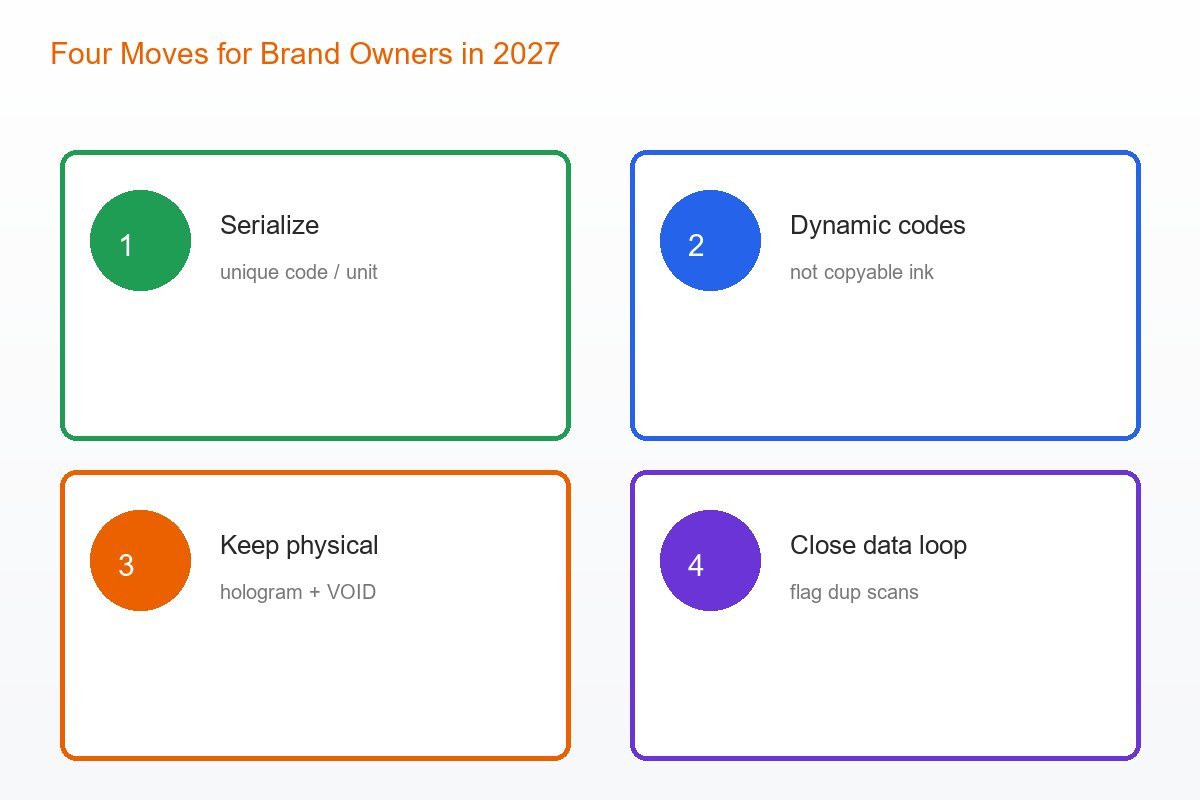
What Brand Owners Should Do in 2027
Serialize every sellable unit
Make codes dynamic, not decorative
Keep a physical layer
Close the data loop


How QSDEFENDER's Portfolio Maps to These Trends
Frequently Asked Questions
Is "physical to digital" replacing holograms and VOID films?
Which technology should we adopt first?
Are the OECD counterfeiting figures real-time 2026 numbers?
Does regulation force serialization in my category?
Putting It Together