Hologram + QR: Hybrid Label Architecture That Works
- Share
- publisher
- Fiona Mai
- Issue Time
- Oct 3,2026
Summary
Hologram + QR hybrid label architecture: why combining an optical layer with a signed QR beats either feature alone, plus a pilot that caught cloned codes.
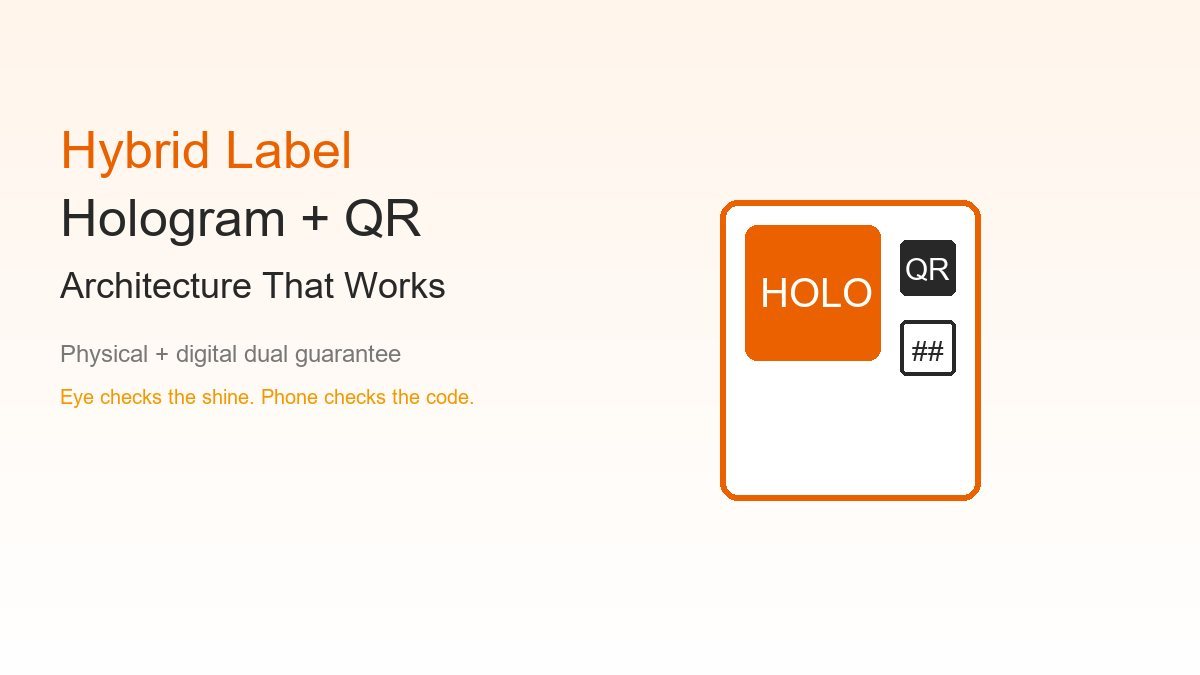
Direct Answer: A Hybrid Hologram + QR Label Combines Visual and Digital Proof
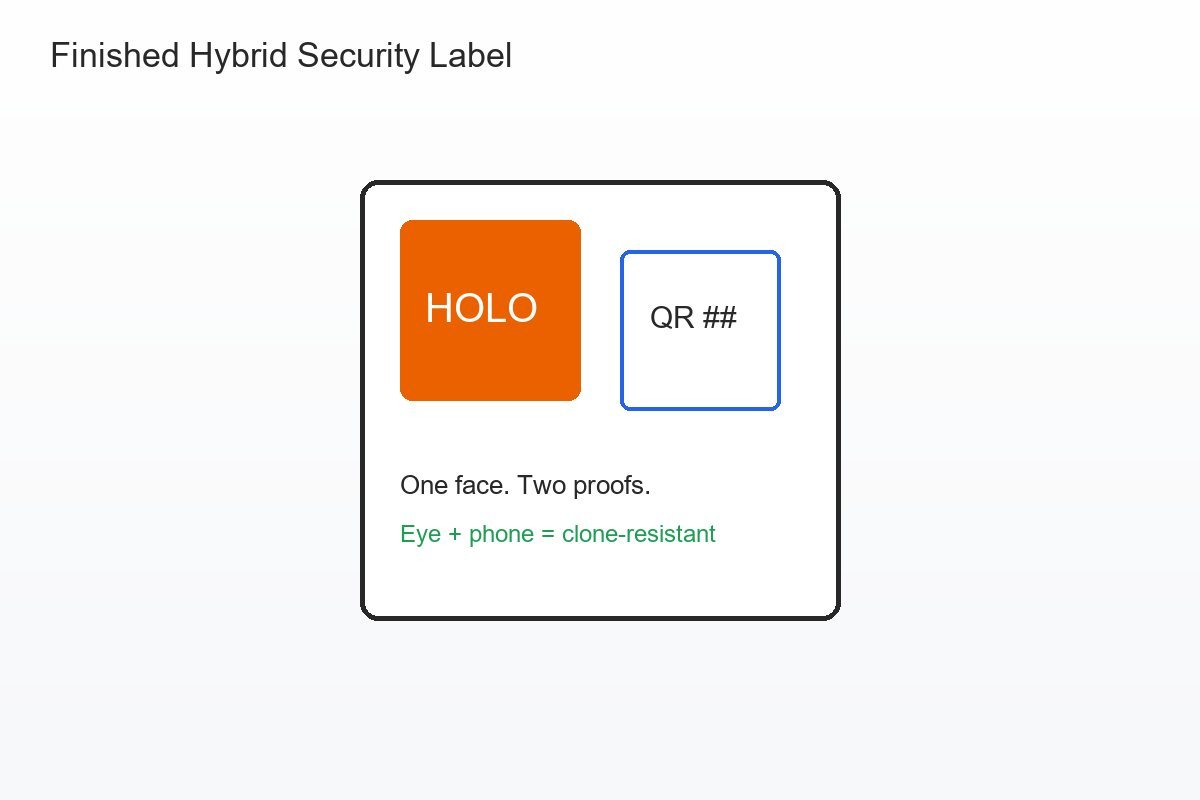
A hybrid hologram + QR label puts two independent security layers on one die-cut face: a holographic optical layer that proves the label is genuine to the naked eye, and a unique QR layer that ties the unit to a digital record for scan-and-verify. Neither layer alone is enough — a hologram can be copied by a determined counterfeiter, and a QR can be reprinted or pointed at a clone site. Together they deliver the "physical + digital dual guarantee" that leading anti-counterfeit programs now use: the eye checks the hologram, the phone checks the code, and a mismatch is caught instantly. This guide shows the architecture, the build, and a real pilot we ran.
Key takeaway: The hologram answers "is this label real?" and the QR answers "is this specific unit authentic and in the right place?". A hybrid label makes a copy fail on at least one of those questions — usually both.
Why Neither Layer Works Alone
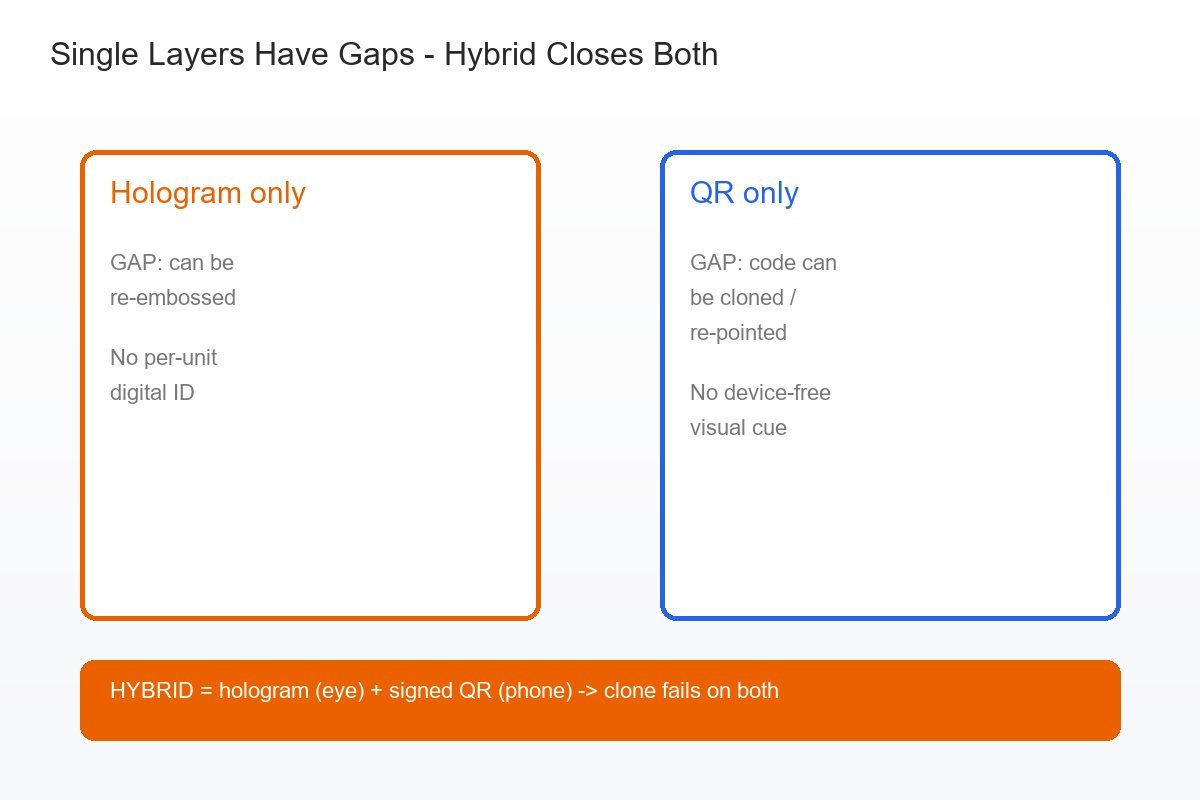
Brands that start with a single feature almost always discover its blind spot after launch. Understanding both gaps is what makes the hybrid architecture worth the small added cost:
- Hologram-only gap: a genuine-looking hologram can be duplicated by high-resolution scanning and re-embossing. It proves the label family is real, not that this unit is the authorized one — and it cannot tell you where the product has been.
- QR-only gap: a QR is just printed data. A counterfeiter can photograph it, reprint it on a fake, or re-point the encoded URL to a spoof verification page. Without a visual anchor, consumers cannot tell a real label from a cloned one.
- The hybrid answer: the hologram gives an instant, device-free authenticity cue, while the QR feeds a server-side check that the serial is live, unredeemed, and in the expected channel. Each layer covers the other's weakness.
The Hybrid Label Architecture
A working hybrid label stacks four functional layers on one substrate. The order matters because it controls both manufacturing and verification flow:
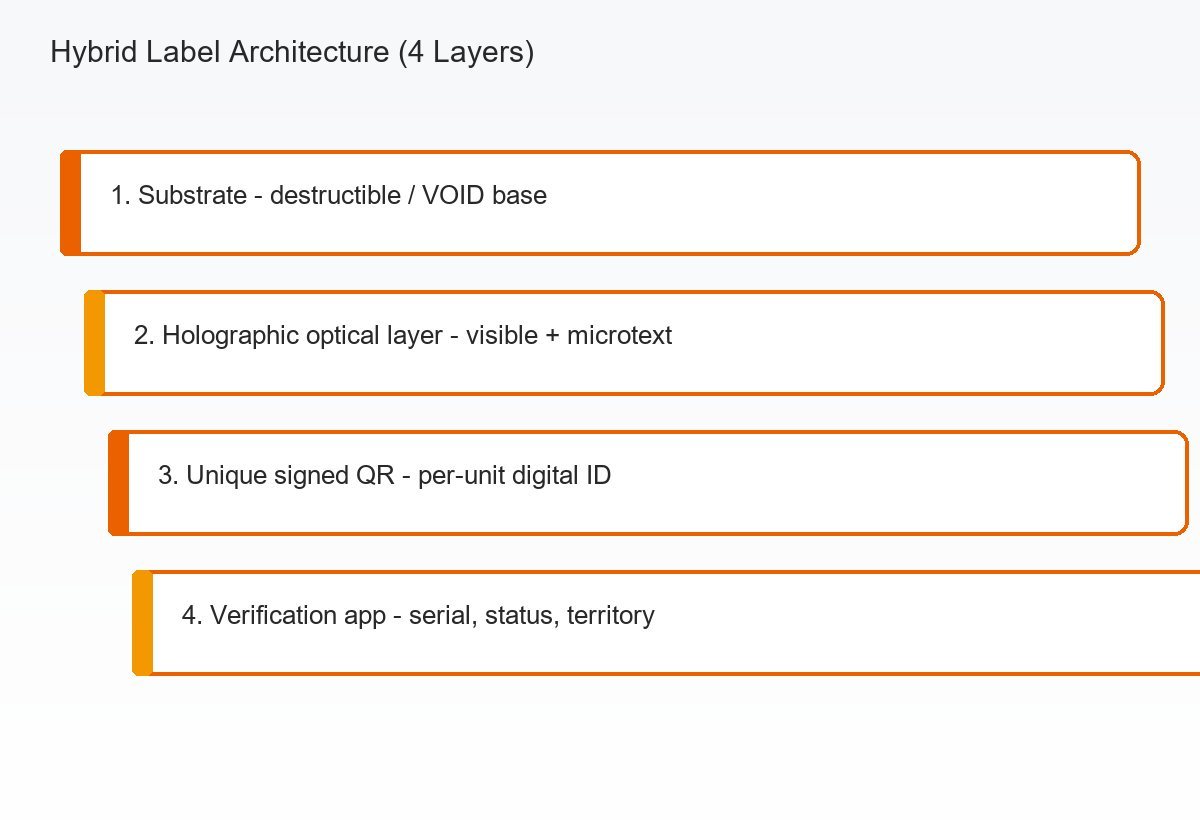
- Layer 1 — Substrate: a tamper-resistant base (often a VOID or destructible face stock) so the label cannot be lifted and reapplied cleanly.
- Layer 2 — Holographic optical layer: a registered hologram or micro-optic patch carrying visible motion and hidden microtext, the device-free "first look" cue.
- Layer 3 — Unique QR / serial: a per-unit code, ideally dynamic or signed, that links to the brand's verification backend rather than a static page.
- Layer 4 — Verification app: a scan that returns identity, channel, and status, and flags a voided, duplicated, or out-of-territory serial.
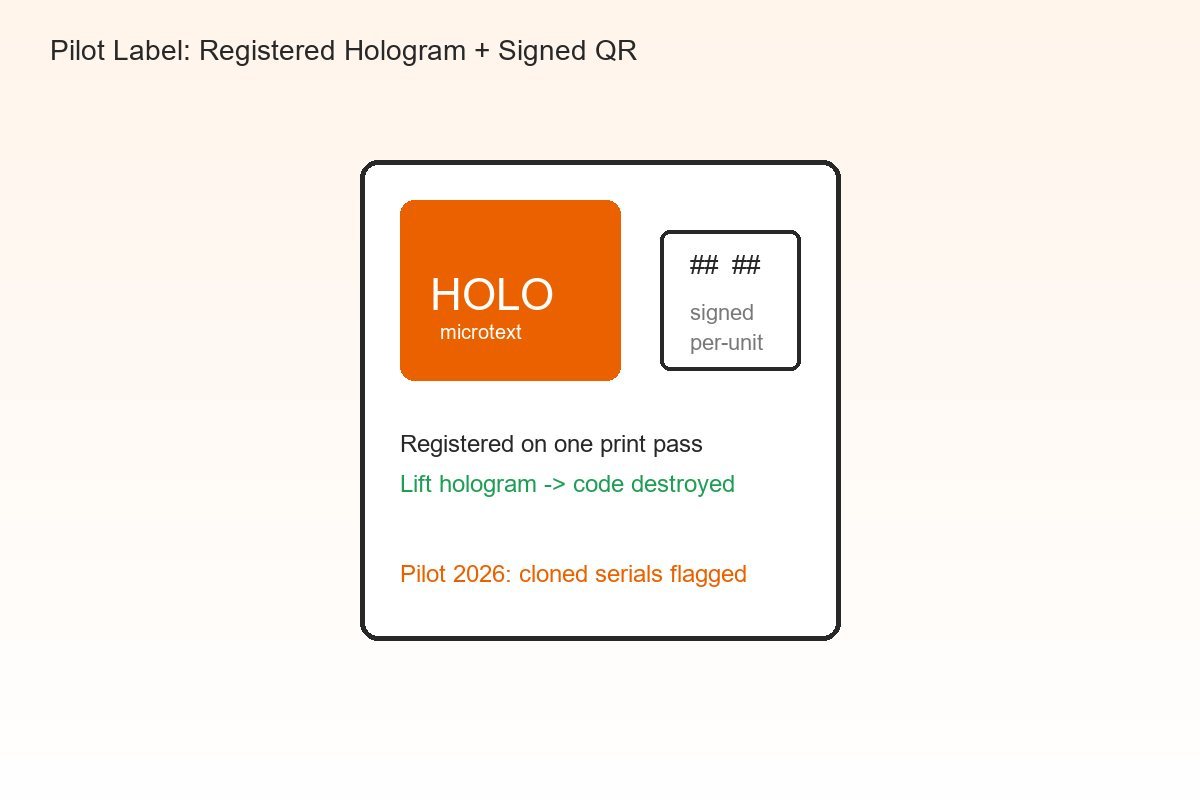
Design rule we follow: the hologram and the QR are registered together on one print pass and one die-cut, so a removed hologram also destroys the code. That makes "swap the QR, keep the shiny sticker" attacks fail physically.
Hybrid vs Single-Layer: What You Actually Get
| Capability | Hologram only | QR only | Hybrid (Hologram + QR) |
|---|---|---|---|
| Instant visual check | Yes | No | Yes |
| Per-unit digital identity | No | Yes | Yes |
| Detects cloned QR page | No | No | Yes (code + visual mismatch) |
| Detects lifted / reapplied label | Partial | No | Yes (destructible substrate) |
| Works without a phone | Yes | No | Yes |
How We Build It on Our Own Line
At QSDEFENDER the hologram, the unique code, and the artwork are produced and registered in a single controlled process, which is what lets the optical and digital layers stay aligned and tamper-coupled. We can carry a custom micro-optic pattern (your mark or hidden text) and encode a per-unit signed QR on the same die-cut face, then verify the print against the code database before it ships. Our hologram layers guide explains the optical side, and our QR implementation playbook covers the code and backend side.
Engineering Case: A Pilot That Caught Cloned Codes
In a 2026 pilot with a mid-size consumer-goods brand, we issued hybrid labels carrying a custom hologram plus a per-unit signed QR. Within the first eight weeks of scanning, the verification backend flagged a batch of serials that were authentic in the database yet appeared on packaging outside the authorized channel. Because the hologram and QR were registered together, the cloned QR alone could not be paired with a genuine optical layer, and field inspectors confirmed the fakes on sight. The brand pulled the affected channel and reissued tamper-coupled labels. This is the "physical + digital dual guarantee" in practice: the digital check found the anomaly, and the optical layer let anyone confirm it without special tools.
Optical anchor
The hologram gives a device-free, instant genuine-or-fake read at any point in the chain.
Digital truth
The signed QR ties each unit to a live backend that tracks serial, status, and territory.
Clone resistance
Registered layers mean a copied code cannot ride on a genuine optical label.
Frequently Asked Questions
Does a hybrid label cost much more than a QR label?
Modestly more, because of the registered optical layer and the controlled print pass, but far less than the loss from one cloned-run incident. Most brands size the premium against the unit value and the counterfeit risk, and the hybrid option usually pays back on the first intercepted batch.
Can the hologram and QR share one scan?
Yes, when the QR is the verification entry point: the scan returns the serial status, and the hologram is the human confirmation that the label itself is genuine. They verify different things and together close the clone gap. Our layered authentication guide expands on combining checks.
What if my product needs tamper-evidence too?
Use a destructible or VOID substrate as Layer 1 so the label cannot be lifted and reapplied, then add the hologram and QR on top. That is the same stack we use for pharma and cosmetics, covered in our tamper-evident packaging guide.
Do I need a custom app?
Not necessarily. A branded scan page or a lightweight verification app can return the result; the key is that the QR resolves to your own backend with signed, per-unit data rather than a static URL a counterfeiter could copy.
Putting It Together
A hybrid hologram + QR label is the pragmatic middle ground between a pure optical feature and a pure digital one: it gives consumers and inspectors an instant visual cue, gives the brand a per-unit digital truth, and makes clone-and-repoint attacks fail on both fronts. The architecture is straightforward — substrate, hologram, signed QR, verification — and the payoff is a label that resists copying without slowing down legitimate scanning. The full series lives in the Anti-Counterfeiting Technology hub, and our engineers can spec a hybrid stack for your product and channel.
Want a hybrid spec? Tell us your product, unit value, and channel risk, and we will propose a registered hologram + signed QR stack built and verified on our own line. Request a hybrid label design review.