NTAG 424 DNA & Cryptographic Authentication Explained
- Share
- publisher
- QSDEFENDER NFC Engineering Team
- Issue Time
- Oct 1,2026
Summary
A technical deep dive into NTAG 424 DNA authentication: the ECC originality signature, 3-pass mutual challenge-response, SUN/SDM dynamic messages with AES-CMAC proof on every tap, replay detection via the 24-bit counter, key slots and diversification, and the operational checklist where deployments actually fail.
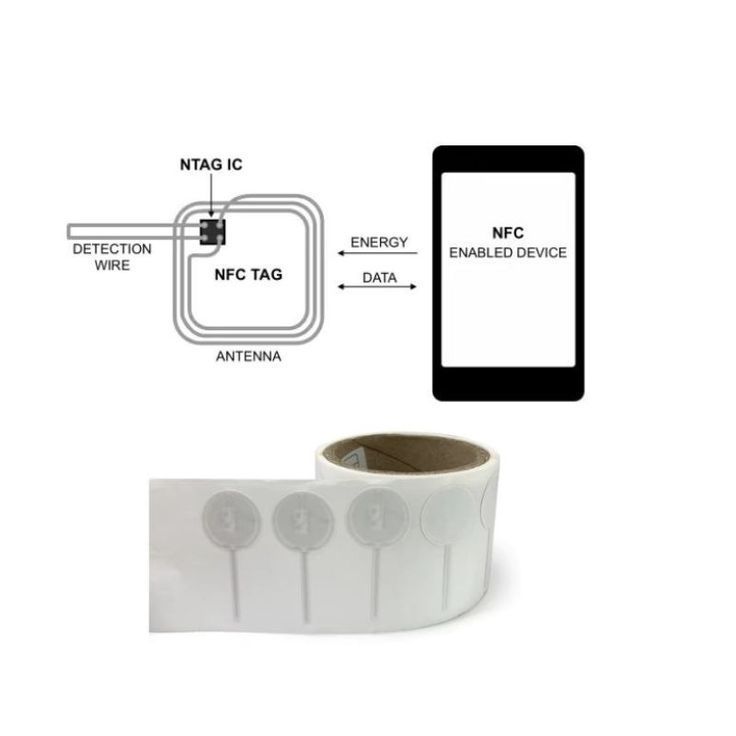
Every week a supplier tells us their NFC labels are "secure" because the chip is an NTAG 424 DNA. The chip is necessary; it is not sufficient. What makes a tap verifiable is not the part number — it is the chain of cryptographic proofs behind NTAG 424 DNA authentication: an originality check that proves the silicon is genuine, a challenge-response handshake that proves nobody can read your secrets from the outside, and a per-tap dynamic message that proves every single scan came from the one chip that holds your key. This deep dive explains each layer, what an attacker can and cannot do against it, and where deployments actually fail.
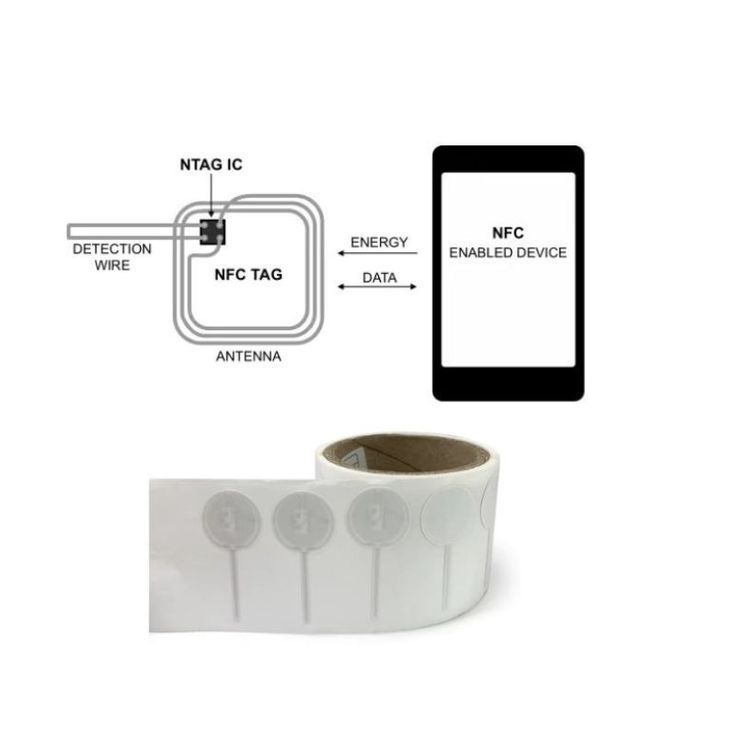
Authentication is a stack: silicon, antenna, encoding, keys and server — the label is only the visible layer.
The Chip in One Table
NTAG 424 DNA is NXP's NFC Forum Type 4 Tag platform built for item-level verification. The facts below come from the official NXP product documentation and the independent explainers we link at the end.
| Attribute | NTAG 424 DNA | Why it matters for authentication |
|---|---|---|
| Interface & protocol | NFC Forum Type 4 Tag, ISO/IEC 14443-4 | Reads natively with any smartphone — no app, no special reader |
| User memory | 256 bytes | Enough for a SUN base URL and mirrors; not for bulky content |
| Crypto | AES-128, or LRP-wrapped AES operation | Industry-standard cipher; LRP adds resistance to certain attack classes |
| Certification | Common Criteria EAL4 (hardware + software) | Third-party evaluated secure element class, not marketing copy |
| Mutual authentication | 3-pass challenge-response | Protected data stays unreadable without the key; key never leaves either side |
| Originality | ECC-based NXP originality signature + AES-128 originality check | Proves the chip left NXP genuine, verifiable offline once |
| Privacy | Random ID and encrypted UID | Defeats passive tracking of people and goods by UID |
| Speed | Up to 848 kbit/s, benchmark authentication time | Verification fits inside a natural tap, under a second end-to-end |
Proof 1: Originality — Is the Silicon Genuine?
The first question a verifier faces is not "is this our tag?" but "is this a real NXP chip at all?" Cloned silicon with reprogrammed UIDs is a real trade. NTAG 424 DNA answers it with an ECC-based originality signature: NXP signs the chip identity at the factory with a private key, and anyone can verify the signature offline against NXP's public key. A lighter AES-128 originality check provides a second assurance path for deployments already running AES infrastructure.
Read the boundary honestly: originality proves the chip is a genuine NXP part. It does not prove the chip holds your key. A genuine chip bought in the open market and encoded with someone else's data passes the originality check. That is why originality is layer one, not the whole answer.
Proof 2: Challenge-Response — Mutual Authentication in Three Passes
Access to the protected data file uses a 3-pass mutual authentication protocol, and the shape of this exchange is what "challenge-response" means in practice:
- Pass 1: the reader asks to authenticate with a specific key slot. The tag generates a random nonce, encrypts it with its stored AES-128 key, and returns the cryptogram.
- Pass 2: only a reader holding the matching key can decrypt the challenge and respond correctly — it decrypts the tag's nonce, mixes in its own random value, and encrypts the pair back to the tag.
- Pass 3: the tag verifies the response and both sides derive the same session key from the exchanged randoms. All further traffic on that session is protected communication over the air interface.
Three properties follow. The key itself is never transmitted — not encrypted, not obfuscated. A cloned or counterfeit chip fails because it cannot produce a valid cryptogram. And an eavesdropper recording the exchange learns nothing reusable, because the randoms are fresh every session. This is the same challenge-response family used in banking cards and e-passports; on this chip it runs inside a Common Criteria EAL4 evaluated implementation, with the LRP-wrapped AES option available when the threat model calls for it.
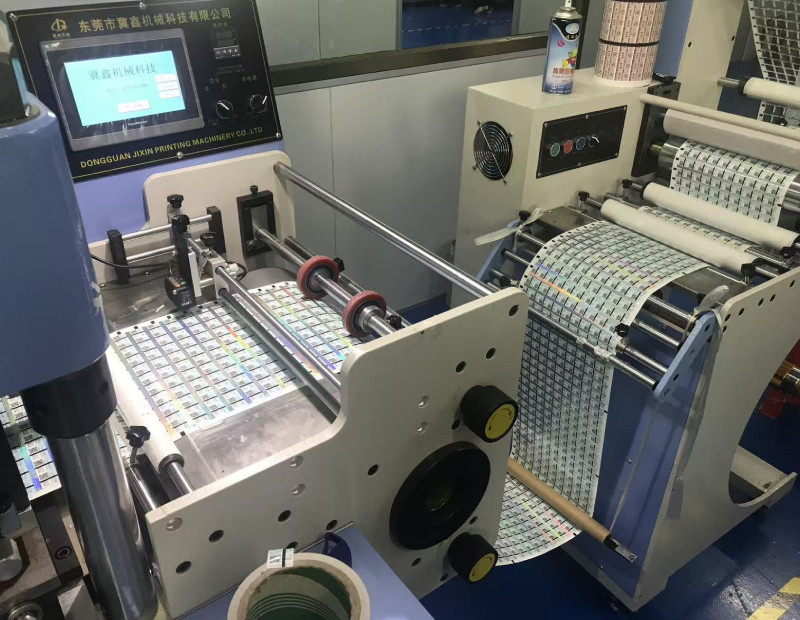
Keys are written exactly once on the production line and verified by 100% read-back — after that, no reader in the field can extract them.
Proof 3: SUN/SDM — A Fresh Verifiable Message on Every Tap
Mutual authentication protects the encoded memory. SUN (Secure Unique NFC) with SDM (Secure Dynamic Messaging) is what makes every consumer tap verifiable — and it is the feature that changes brand protection economics, because the phone does all the work. The mechanism, as documented by NXP and detailed in the nfcore SUN/SDM explainer:
- The tag stores a base URL. On each tap, it assembles a dynamic URL whose query parameters (picc and cmac) are computed on-chip at read time.
- picc carries the UID and the tag's 24-bit read counter, encrypted with AES-128 under the SUN key — competitors and trackers see ciphertext, not identity.
- cmac is an 8-byte truncation of an AES-CMAC computed per NIST SP 800-38B over that message. Because the counter feeds the calculation, the output is different on every single tap.
- The server holding the matching key decrypts picc, recomputes the MAC, and compares. A match proves the message came from a chip holding your key, unmodified in transit.
The counter adds a replay tripwire. Every scan increments the 24-bit counter (up to 16,777,215 reads — far beyond label lifetimes). If your backend sees the same counter value and MAC pair twice, that pair was copied and replayed: flag it, and route the second tap to a warning page. A cloner who photographs a genuine URL and reprints it produces exactly this signature — the first counterfeit tap exposes the first clone.
Proof 4: Key Lifecycle — Where Deployments Actually Fail
The chip ships with multiple independent AES-128 key slots (three on the 424 DNA class, per the family comparison in the nfcfyi NTAG DNA glossary), versioned and rotatable via the ChangeKey command. The cryptographic math above is solved; the operational side is where brands get burned. Our engineering checklist:
- Diversify per tag. Derive each tag's SUN key from a master key plus the UID, so one leaked key compromises one item, not the fleet.
- Write once, read never. Keys are injected during encoding and are not readable back afterwards — by anyone, including us. Verify with a 100% encode-and-read pass on the line, not a sample.
- Decide custody before production. Customer-held keys mean the customer runs the verification server. Escrowed provisioning means the integrator operates it. Both work; ambiguity does not.
- Rotate deliberately. Key versions let you migrate a running fleet without a recall; plan the rotation window at deployment time, not during an incident.
- Counters need sync. The backend must tolerate out-of-order taps (airplane mode, multi-phone checks) and only flag true reuse pairs — a naive "counter must increase" rule floods support with false alarms.
What an Attacker Can and Cannot Do
| Attack | Outcome against NTAG 424 DNA authentication |
|---|---|
| Reprint a genuine URL on a fake product | Detected server-side: the counter/MAC pair repeats and the second tap shows a tamper warning |
| Clone the chip memory onto an empty tag | Clone cannot produce valid CMACs — it does not hold the key, and the encrypted picc is not reproducible |
| Buy genuine chips and encode a parallel fleet | Clones fail challenge-response and CMAC: they lack the diversified keys only your encoder issued |
| Sniff the air interface | Session traffic is protected; keys are never transmitted; randoms are fresh per session |
| Track consumers by UID | Random ID and encrypted UID modes defeat passive UID tracking |
| Attack the server or steal the master key | Out of the chip's reach — this is the honest limit: system security equals key custody discipline |
Where NTAG 424 DNA Authentication Fits in the Program
Crypto is the digital layer of a four-layer program (overt, covert, forensic, digital) — pairing it with visible deterrents is what our RFID & NFC label buyer's guide calls avoiding the "encrypted chip, two-cent print" mismatch.
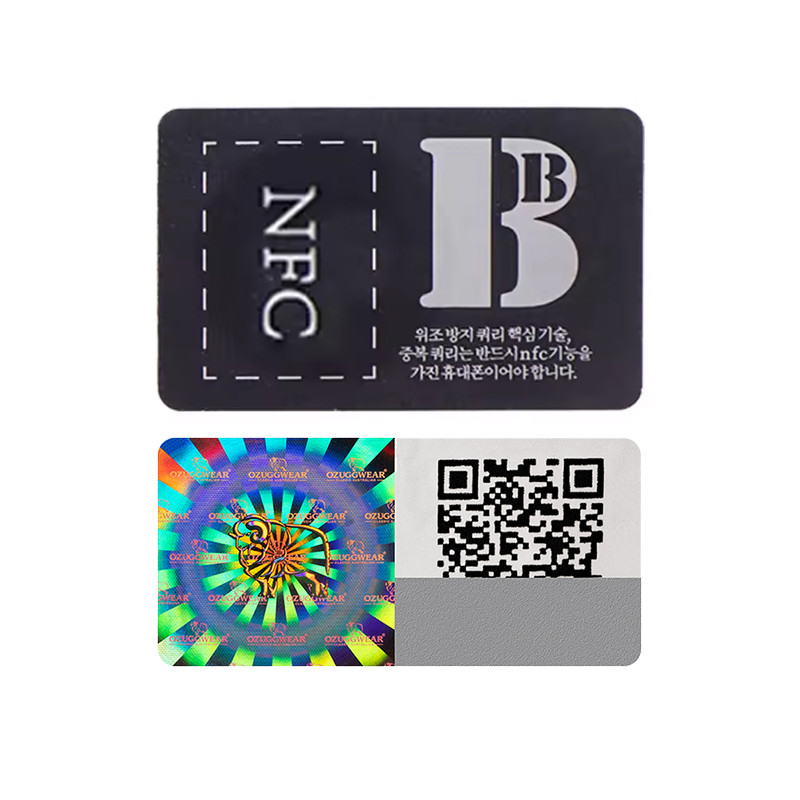
One authentication platform, many form factors — the digital layer pairs with the overt and covert layers around it.
The production-side story of these labels entering mass production, including key injection and 100% read verification, is in our production launch announcement; the frequency-band decision that precedes chip selection is covered in the RFID label deep analysis.
Honest Boundaries
- Verification must be server-side. Any proposal that claims "offline verification" of a 424 DNA label misreads the architecture — the phone opens a URL; the verdict is computed where the keys live.
- Unit price is public knowledge. Industry comparisons put the class around $0.30–$1.00 per label at volume (versus $0.05–$0.20 for static NTAG 21x) — treat as magnitude only; our quotes are project-specific and written.
- The real cost is infrastructure. Encoding, key management and the verification backend outweigh the label itself; budget them as a system.
- We publish no client data. Deployment numbers and case specifics stay private; this article describes mechanisms, not projects.
Talk to an Engineer, Not a Sales Script
If you are weighing NTAG 424 DNA against static NFC or UHF, the fastest path is a 30-minute technical call: bring your product, substrate and channel problem, and we will walk through chip choice, key custody and the verification stack. Talk to an engineer — or request encoded samples to test the full tap-to-verdict flow yourself.