Pharma Serialization Compliance Update: DSCSA & EU FMD 2026
- Share
- publisher
- Fiona Mai
- Issue Time
- Oct 6,2026
Summary
A 2026 pharma serialization compliance update covering FDA's full DSCSA enforcement and small-dispenser relief, plus the European Commission's EU FMD Q&A Version 22, with a practical brand-owner checklist.

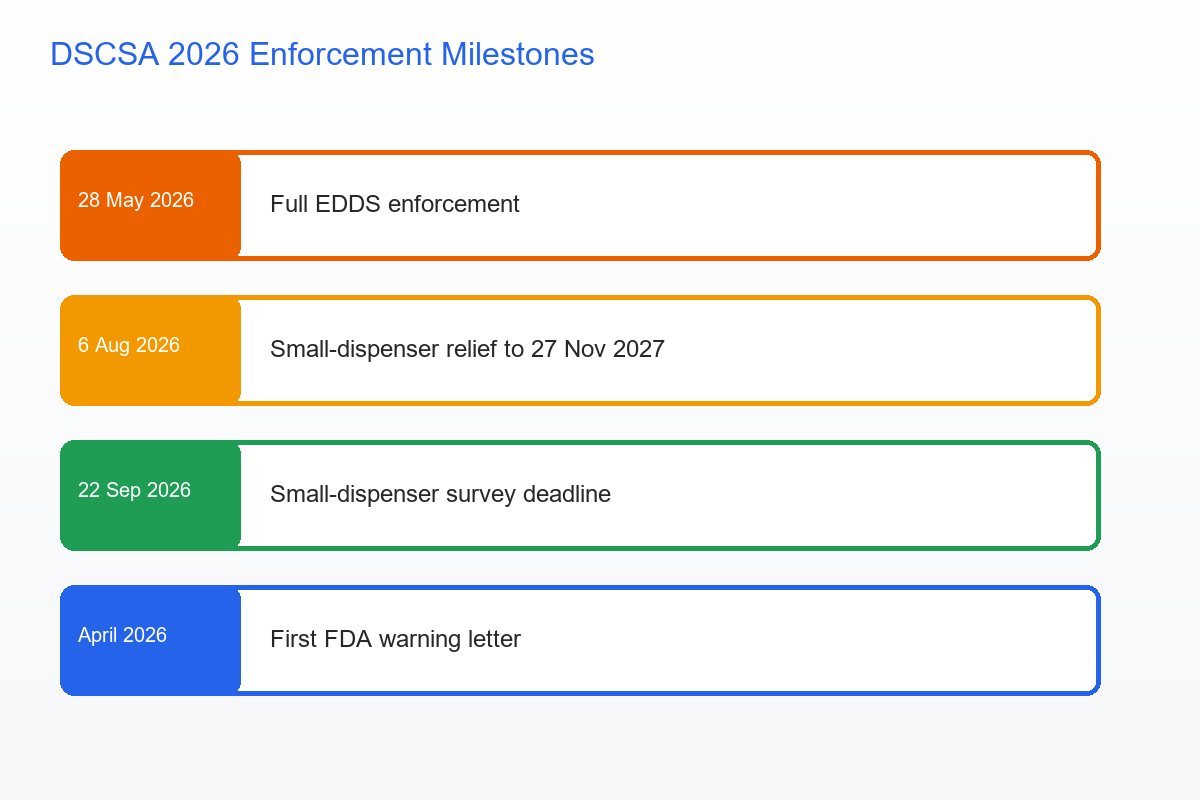
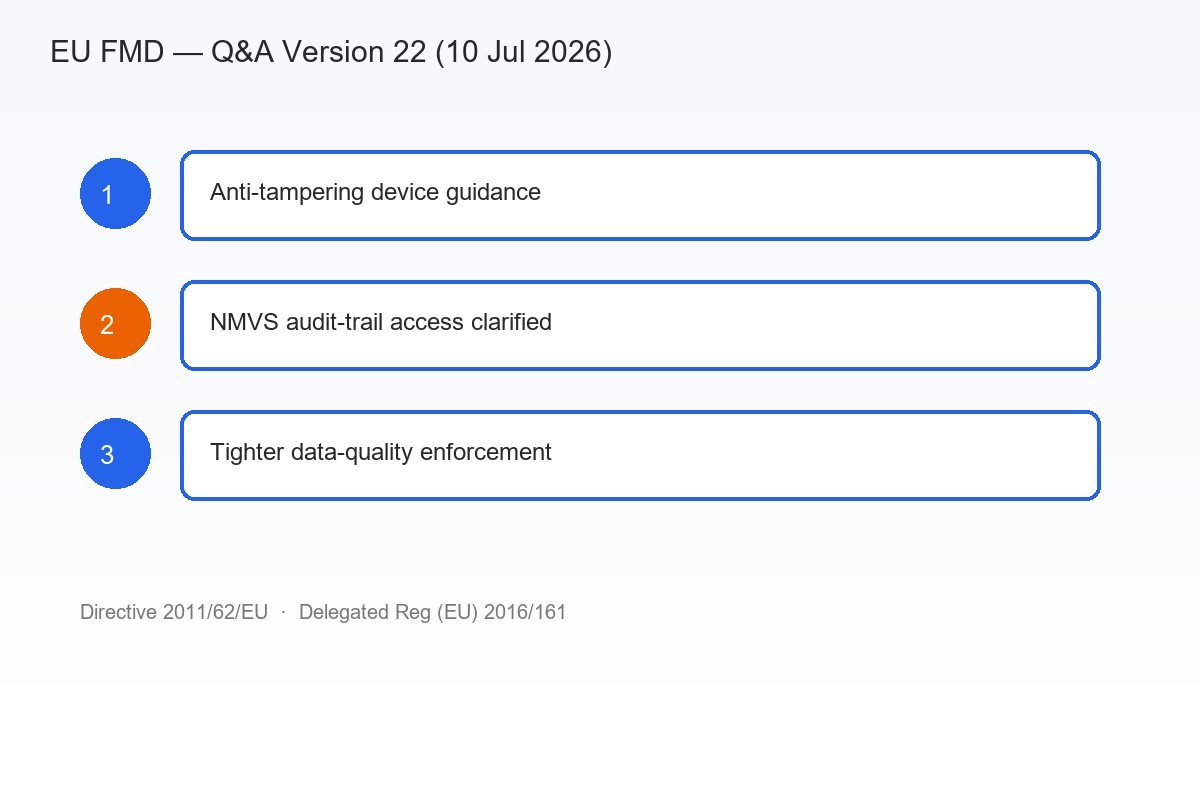
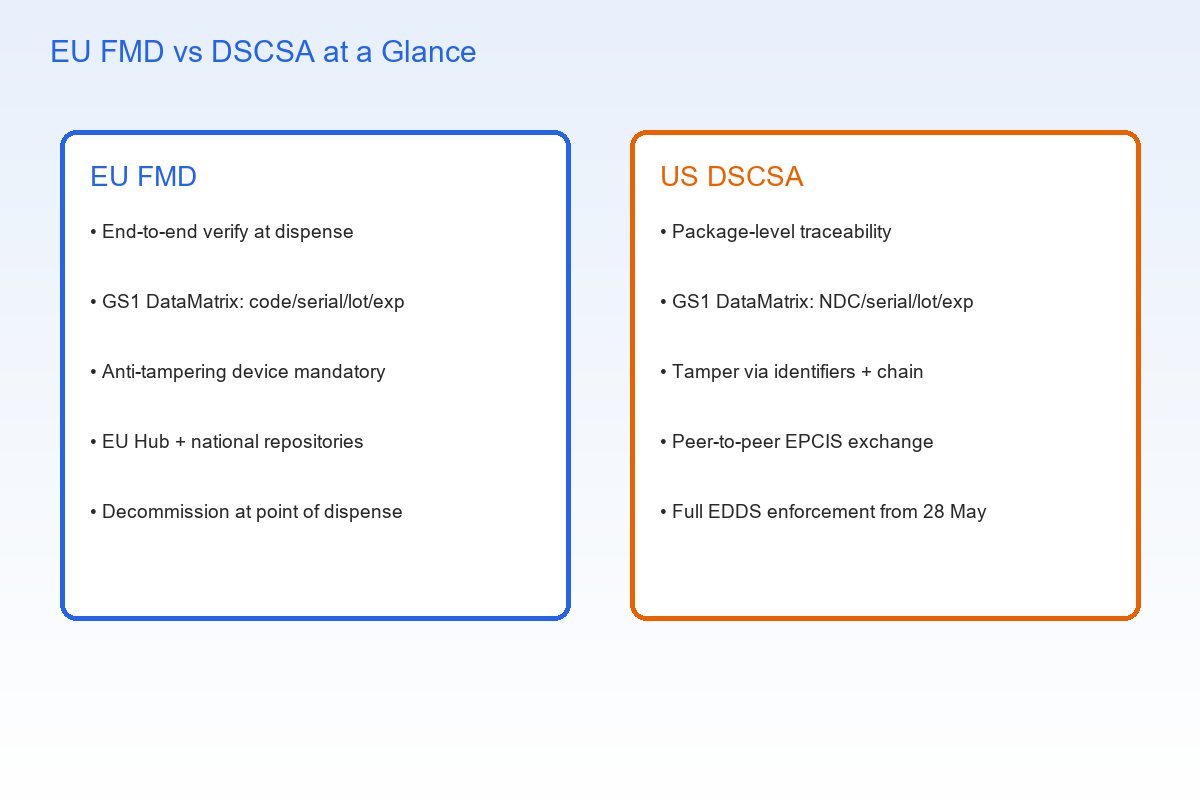
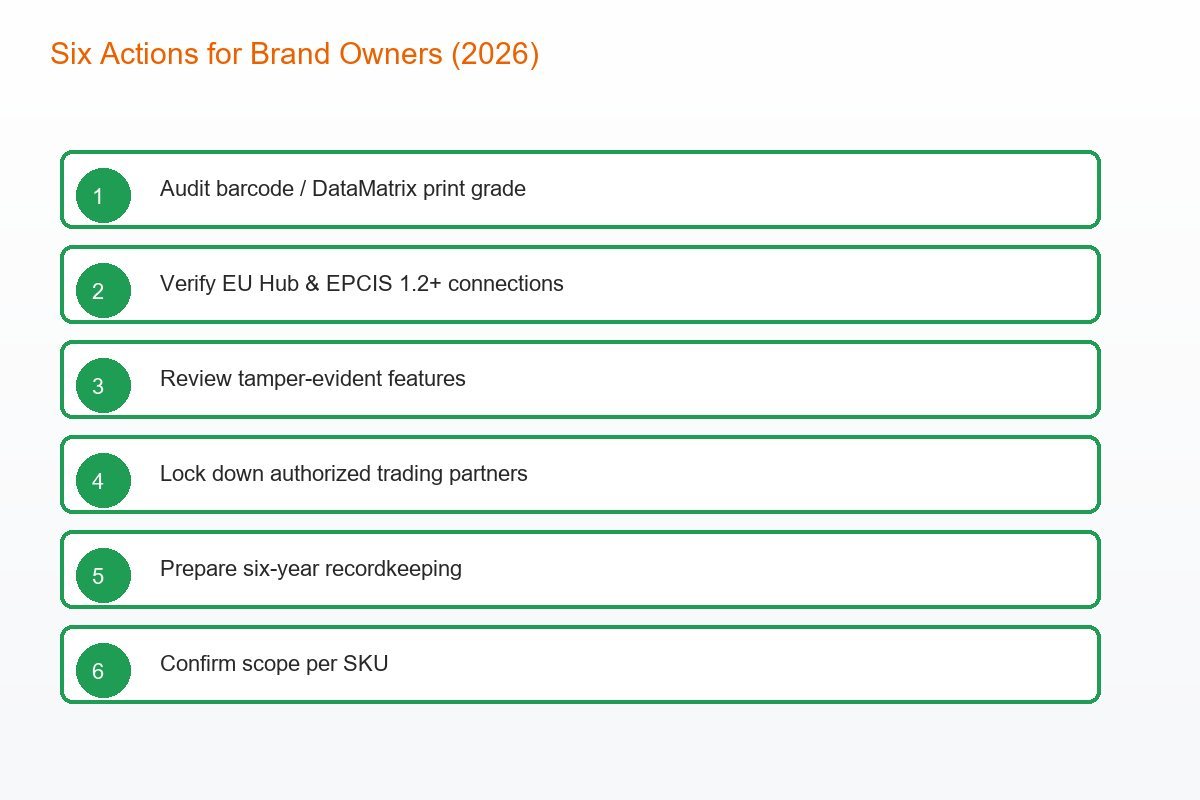
QSDEFENDER Newsroom · Published 2026-10-06 · Source: U.S. FDA & European Commission / EMA regulatory updates The second half of 2026 has brought two concrete changes that every pharmaceutical brand owner shipping into the U.S. or EU must account for. In the United States, the FDA began full enforcement of the enhanced drug distribution security requirements on 28 May 2026 and, on 6 August 2026, extended a compliance relief window for small dispensers. In Europe, the European Commission issued Version 22 of its Q&A on medicinal-product safety features on 10 July 2026, sharpening expectations around anti-tampering devices and data quality. This update distills both into a practical checklist for 2026. Why it matters: both regimes now treat serialization as an operating baseline, not a one-time project. Barcode print grade, tamper-evident design, and clean data exchange are under active enforcement — a weak DataMatrix or a missing anti-tamper device is now a rejected shipment, not a future to-do. The U.S. Drug Supply Chain Security Act has been phasing in since 2013, but its most demanding chapter opened after the stabilization period ended. The concrete 2026 milestones: The EU Falsified Medicines Directive (Directive 2011/62/EU and Delegated Regulation (EU) 2016/161) has required safety features on most prescription medicines since 9 February 2019. By February 2026 the European Medicines Verification System had been live for seven years, and the European Commission's Q&A Version 22 (10 July 2026) refines three areas brand owners care about: The two frameworks share a goal — keep falsified medicines out of the legal supply chain — but differ in architecture. Here is the 2026 picture: End-to-end verification at dispense. GS1 DataMatrix (product code, serial, batch, expiry) on every pack, an anti-tampering device, EU Hub + national repositories, and decommissioning at point of dispense. 2026: tighter NMVS data quality. Package-level traceability through the chain. GS1 DataMatrix (NDC, serial, batch, expiry), parent-child aggregation, peer-to-peer EPCIS exchange. 2026: full EDDS enforcement live from 28 May; small-dispenser relief to 27 Nov 2027. Whether you ship to one market or both, the 2026 baseline is the same: a readable data carrier plus a durable physical seal. Recommended next steps: No. Delegated Regulation (EU) 2016/161 remains in force. The broader EU pharmaceutical legislation is under revision and NMVS data-quality enforcement is tightening, but the core FMD safety-feature requirements are unchanged. Yes. DSCSA applies to prescription drug products distributed in the U.S. supply chain. If your product enters the U.S. market, you must comply regardless of where it is manufactured. Both regimes specify a 2D DataMatrix for the regulated unique identifier, not a QR code. A QR remains valuable as a consumer-facing or brand-protection layer alongside the official DataMatrix, which is exactly the hybrid approach we design. 2026 is a compliance baseline, not a finish line. For U.S. brands, the serialized code and tamper-evident seal are now under live enforcement; for EU brands, tamper-evident design and NMVS data quality are the focus of active regulatory scrutiny. The right label partner turns the combination of a grade-B-or-better DataMatrix and a durable anti-tamper layer into real defense rather than a checklist. The full series lives in the Anti-Counterfeiting Technology hub, and our team can scope an audit-ready stack for your markets. Need an audit-ready serialization and tamper-evident stack? Tell us your markets, SKUs, and the data-exchange requirements your trading partners demand, and we will outline a compliant labeling and verification design. Contact our compliance team.Pharma Serialization Compliance Update: DSCSA & EU FMD 2026
DSCSA — Full Enforcement, Plus a New Small-Dispenser Timeline (U.S.)
EU FMD — Q&A Version 22 Tightens Safety-Feature Expectations

EU FMD vs DSCSA at a Glance
EU FMD
US DSCSA
Six Actions Brand Owners Should Take Now
Frequently Asked Questions
Is EU FMD being replaced in 2026?
Does DSCSA apply to products manufactured outside the U.S.?
Can a QR code satisfy EU FMD or DSCSA?
Putting It Together