Pharma Serialization & DSCSA: What Suppliers Must Deliver
- Share
- publisher
- QSDEFENDER Anti-Counterfeit Engineering Team
- Issue Time
- Oct 6,2026
Summary
What pharma suppliers must deliver under DSCSA and EU FMD: a unique serial code, a tamper-evident seal, a verification path, and compliance records, backed by ISO 27001-grade data security.
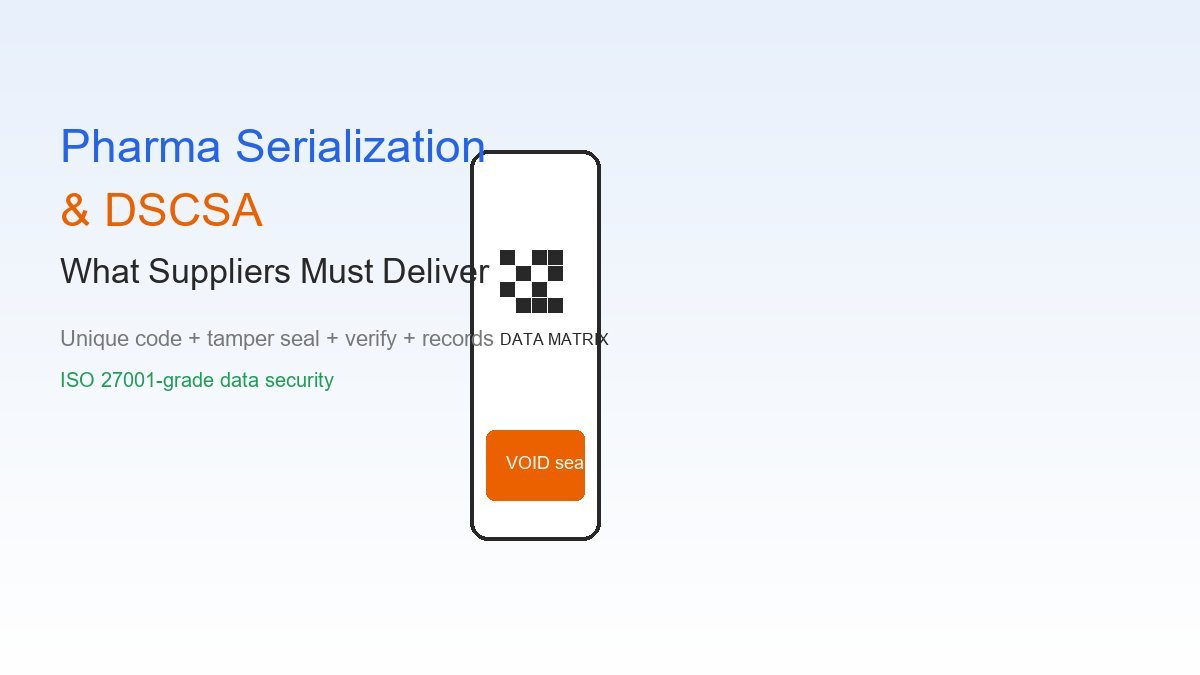
Direct Answer: Suppliers Must Deliver a Unique Serial Code, a Tamper Seal, a Verify Path, and Compliance Records
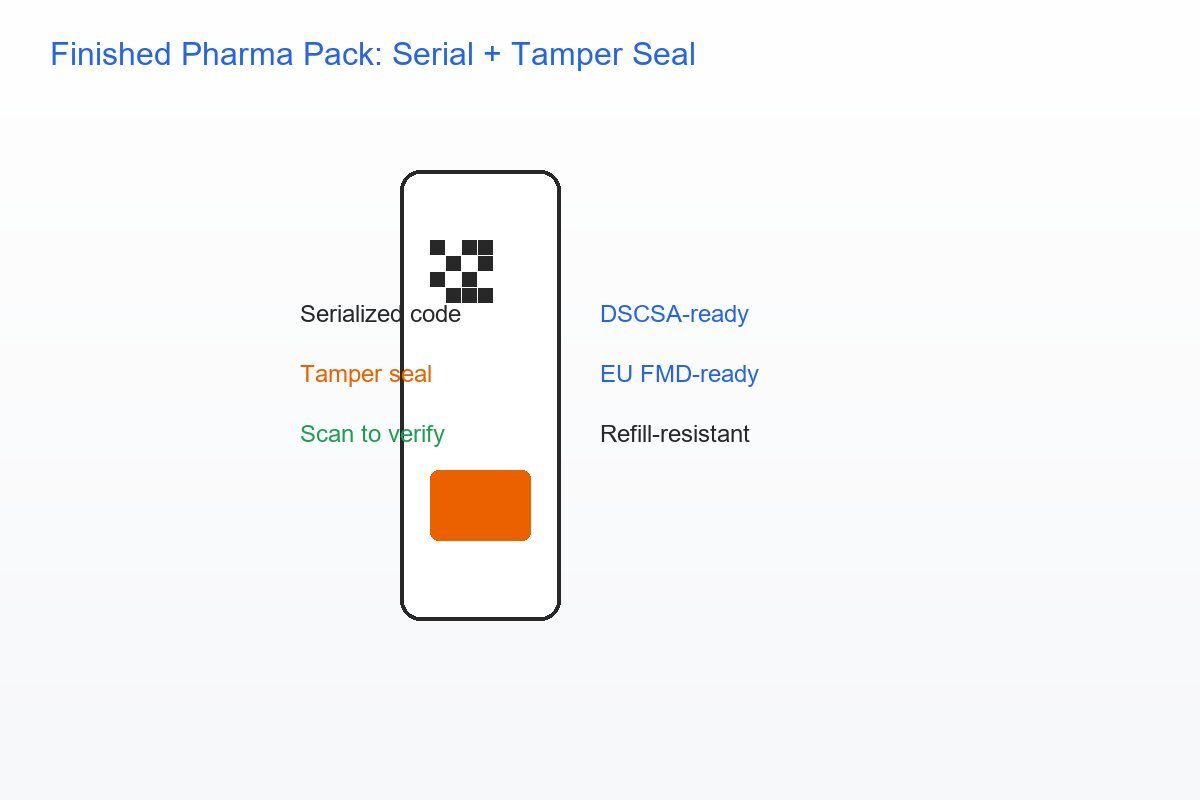
For pharmaceutical products, pharma anti counterfeiting under DSCSA and EU FMD means a supplier must deliver four things on every saleable unit: a unique, serialized identity that can be tracked through the supply chain; a tamper-evident seal so the package cannot be silently opened and refilled; a verification path a pharmacist, regulator, or patient can use to confirm the unit; and the compliance records and reports the law requires (transaction history, serialization events, and exception handling). Medicines are a life-safety category, so a fake or diverted pack is not a brand problem — it is a patient-safety event. This guide lists what suppliers must deliver, compares DSCSA and EU FMD, and explains the security and certification posture buyers should expect.
Key takeaway: serialization and tamper-evidence are now baseline regulatory requirements in the US and EU, not optional features. A supplier that cannot deliver all four elements is not DSCSA- or EU FMD-ready.
Why Pharma Serialization Is Strongly Regulated
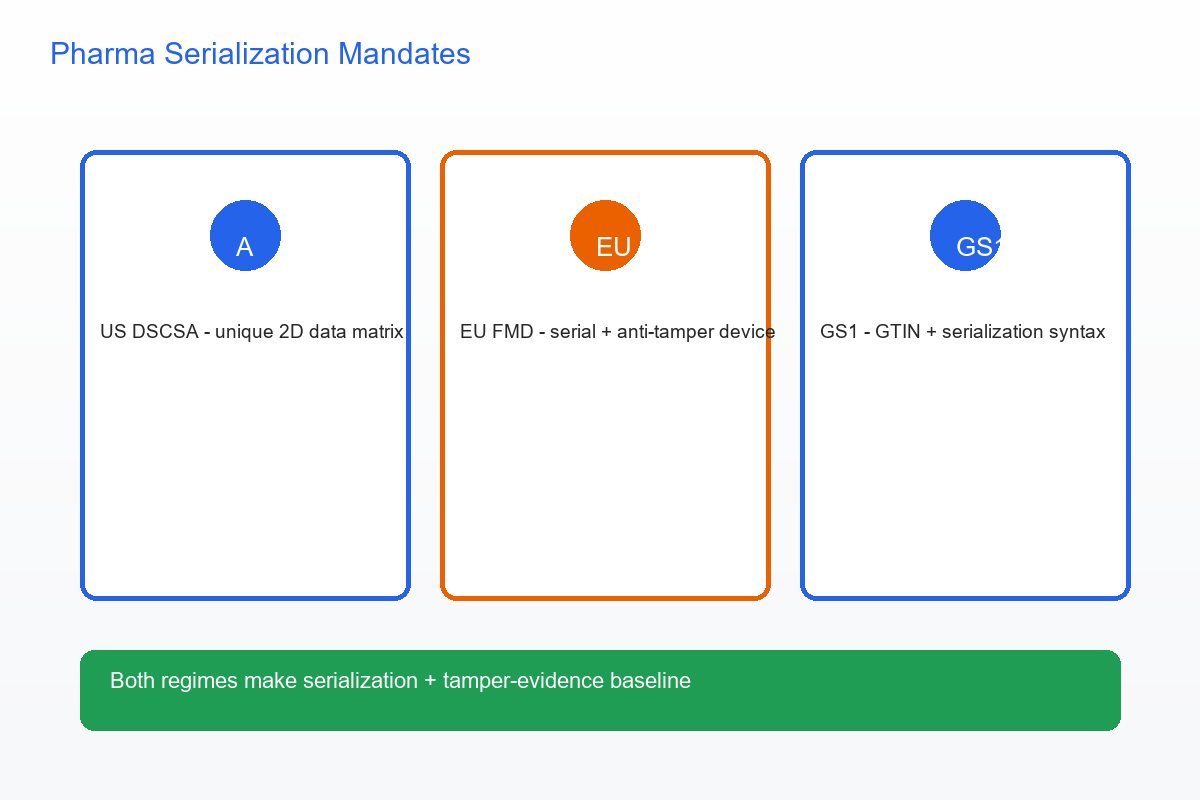
The pharmaceutical supply chain is regulated harder than almost any other category because the failure mode is a patient harmed by a substandard or falsified medicine. Two regimes now define what suppliers must deliver:
- US DSCSA (Drug Supply Chain Security Act): requires a unique product identifier (2D data matrix with NDC, serial, lot, expiry) on each saleable unit, electronic transaction history, and verification/exception handling at enforceable milestones.
- EU FMD (Falsified Medicines Directive): requires unique serialization plus an on-pack anti-tamper device and verification against the national repository before dispensing.
- GS1 identification: the GTIN plus serialization syntax used to encode the unique identity in a scannable, interoperable form.
The Four Deliverables Every Pharma Supplier Must Provide
A compliant supplier does not hand over loose labels — it delivers a verifiable, tamper-coupled identity system. Sequence matters: you cannot verify or report on a unit you have not uniquely serialized.
1. Unique serial code
Encode a per-unit data matrix (NDC plus serial, lot, expiry) so each pack is individually known across the chain.
2. Tamper-evident seal
Add an on-pack anti-tamper device (VOID label, destructible film, or sealed carton) so opening is permanent and visible.
3. Verification path
Give pharmacists, regulators, and patients a way to confirm the unit against the authoritative record in seconds.
4. Compliance records
Maintain transaction history, serialization events, and exception handling ready for audit and verification requests.
DSCSA vs EU FMD: What Suppliers Must Deliver
The two regimes share the same intent — a traceable, verifiable unit — but differ in scope and the verification endpoint. A supplier serving both markets must satisfy both:
| Requirement | US DSCSA | EU FMD |
|---|---|---|
| Unique identifier | 2D data matrix (NDC, serial, lot, expiry) | Unique serial plus data matrix on pack |
| Anti-tamper device | Expected under packaging integrity | Required on pack before dispensing |
| Verification | Verification router or trading-partner requests | National medicines verification repository |
| Transaction history | Electronic, unit-level by milestone | Repository-based verification events |
| Exception handling | Quarantine, investigate, report | Decommission or alert on suspect pack |
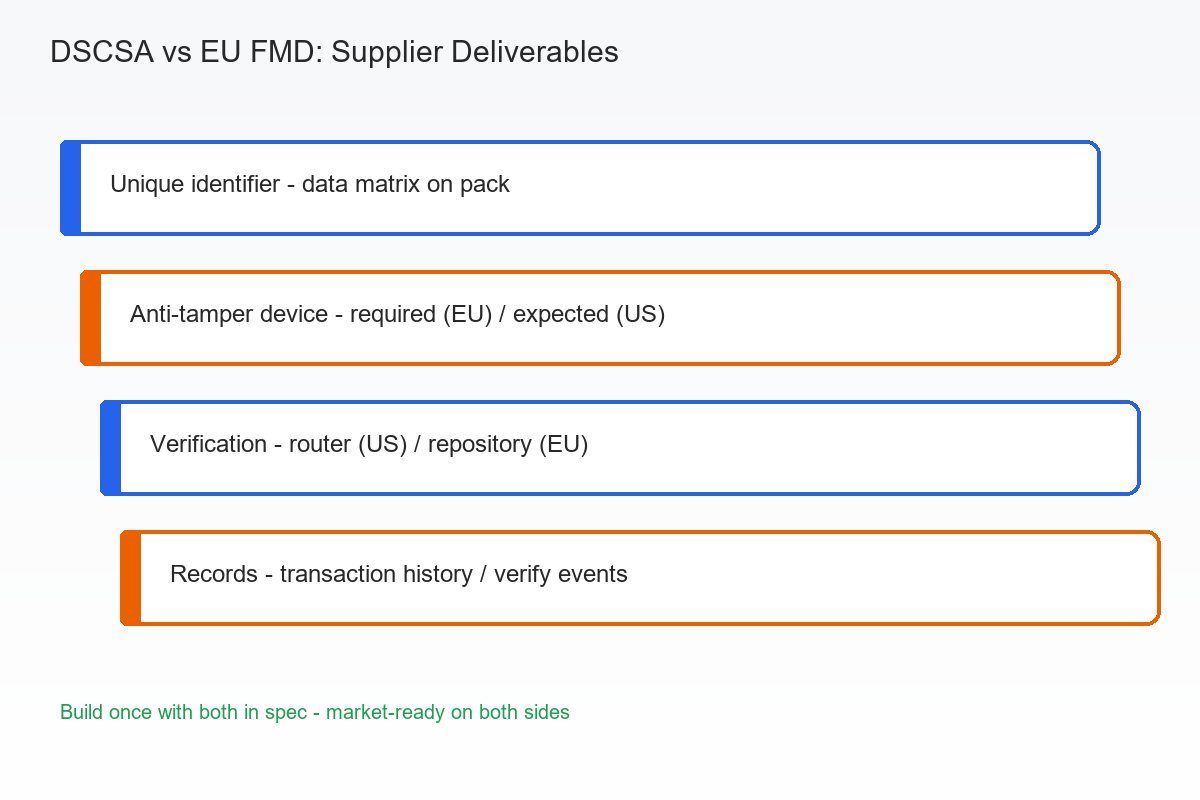
What we build: the serialized code and the tamper-evident seal are produced and registered on our own controlled line, so the optical and digital identity stays bound to the genuine pack — the same discipline behind the tamper-evident packaging used for pharma and cosmetics.
Security & Certification Posture Buyers Should Expect (ISO 27001)
Serialization data is sensitive: it reveals product movement, volumes, and trading relationships. A credible supplier should run an information security management system certified to ISO 27001, so the serial and verification data is protected, access-controlled, and auditable. Buyers running GxP or GDP environments should also expect documented change control, validated printing and encoding, and a verification service with uptime and breach-response commitments. The certification is not a marketing badge — it is the control framework that keeps the anti-counterfeit system itself from becoming the weak link.
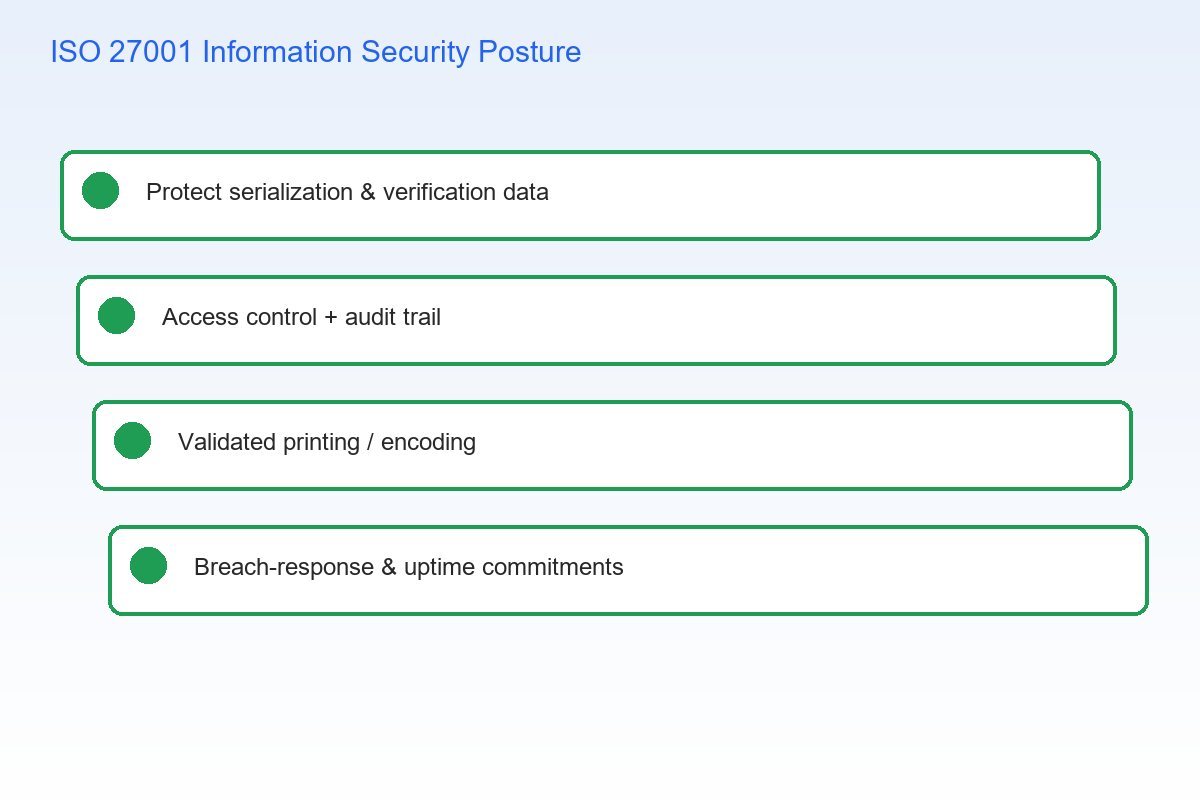
How We Build It on Our Own Line
At QSDEFENDER the serialized code and the tamper-evident seal are produced and registered in a single controlled process, which is what keeps the identity bound to the genuine pack rather than a diverted or refilled one. We encode a per-unit signed data matrix, apply a VOID or destructible seal on the carton or primary pack, and verify the print against the serialization database before it ships. Our tamper-evident packaging guide covers the seal side, and our QR implementation playbook covers the code and backend side.
Frequently Asked Questions
Is a tamper-evident seal required under DSCSA?
DSCSA centers on the unique identifier and transaction history, while EU FMD explicitly requires an on-pack anti-tamper device. In practice, US suppliers add tamper-evident packaging as part of packaging integrity, and many packs bound for both markets carry the device to keep one global spec. Our pharma packaging guide shows the options.
Does serialization stop counterfeit medicines on its own?
It stops the easy clones and gives an audit trail, but only if the verification endpoint is enforced at dispensing and exceptions are actually quarantined. Pair serialization with a tamper seal and a verifiable backend so a diverted or refilled pack is caught, not just logged.
Why does ISO 27001 matter for a label supplier?
Because the serial and verification data is sensitive supply-chain intelligence. An uncertified processor can leak or tamper with that data, defeating the whole system. ISO 27001 is the evidence that data protection is designed in, not bolted on.
Can one supplier serve both DSCSA and EU FMD?
Yes — the shared backbone is GS1-based unique serialization plus a tamper device; the differences are the verification endpoint and reporting format. Build once with both in the spec and the pack is market-ready on both sides of the Atlantic, as discussed in our compliance playbook for other regulated categories.
Putting It Together
A pharma supplier is DSCSA- and EU FMD-ready only when it delivers all four elements: a unique serialized code, a tamper-evident seal, a verification path, and the compliance records behind them — backed by an ISO 27001-grade security posture that protects the data itself. Medicines are a life-safety category, so the standard is proof, not promise. The full series lives in the Anti-Counterfeiting Technology hub, and our engineers can spec a serialization-ready stack for your packs and markets.
Need a DSCSA or EU FMD-ready spec? Tell us your packs, markets, and verification endpoint, and we will propose a serialized-code plus tamper-seal plus verify stack built and verified on our own line. Request a pharma serialization review.