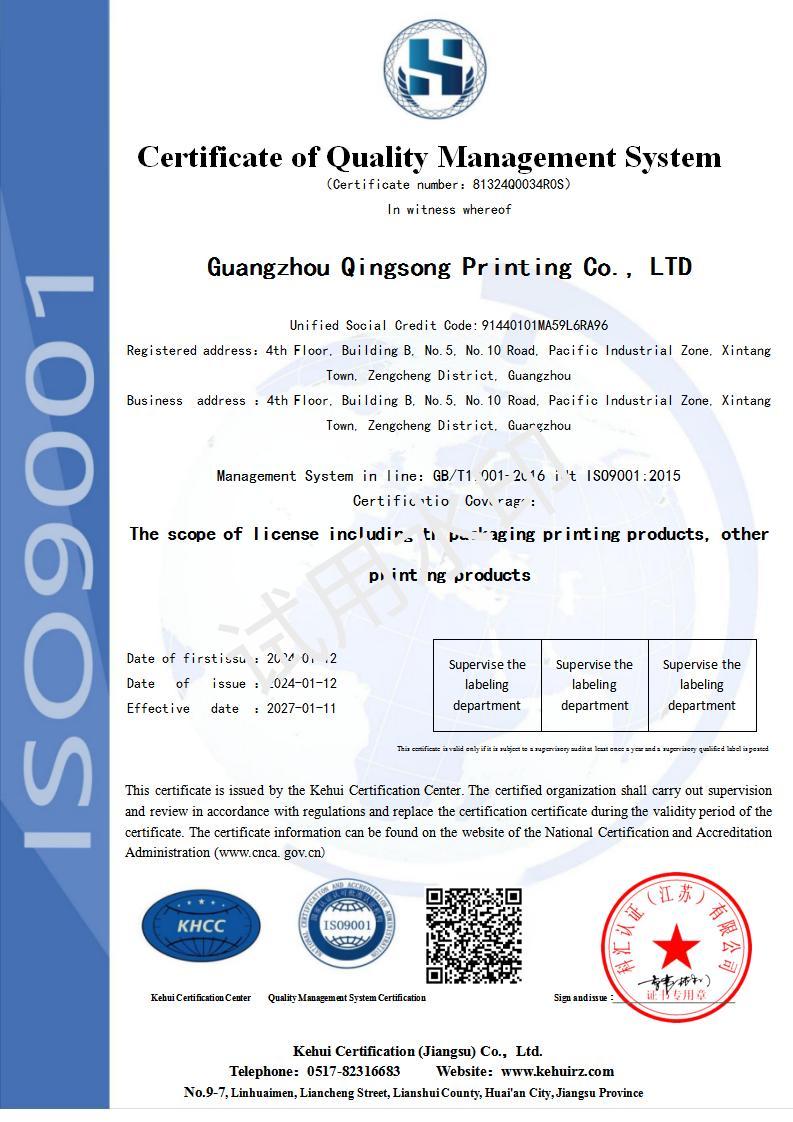
ISO9001
Item specifics
- Expiration Date
- 2024/1/12 - 2027/1/11
- No.
- 81324Q0034R0S
- Certification bodies
- Kehui Certification(Jiangsu)Co.,Ltd.
Certificate description
ISO 9100 Certification Description for the Anti-Counterfeiting Label Industry
Introduction
The ISO 9100 certification emphasizing stringent quality management systems to ensure product authenticity, traceability, and reliability. This certification serves as a globally recognized benchmark, affirming an organization's commitment to delivering high-quality anti-counterfeiting labels that protect brand integrity and consumer trust. The certificate acknowledges enterprises that adhere to rigorous standards in production, technological innovation, and supply chain management, ensuring their products meet the demands of a dynamic global market.
Background and Significance of ISO 9100 Certification
As counterfeit products continue to pose significant challenges to global trade, the anti-counterfeiting label industry plays a pivotal role in safeguarding intellectual property, preventing fraud, and enhancing market confidence. The ISO 9100 standard, specifically designed for this industry, sets forth comprehensive requirements for quality management systems, focusing on the unique needs of anti-counterfeiting technologies. Achieving ISO 9100 certification demonstrates an organization’s ability to consistently produce secure, high-quality labels while maintaining robust processes to combat counterfeiting threats.
This certification is not only a mark of excellence but also a catalyst for industry-wide improvement. It encourages organizations to adopt best practices, innovate in anti-counterfeiting technologies, and foster trust among stakeholders. Certified enterprises are recognized as leaders in the fight against counterfeiting, contributing to a safer and more reliable marketplace.
Certification Scope and Requirements
The ISO 9100 certification encompasses a comprehensive set of requirements tailored to the anti-counterfeiting label industry. Key areas of focus include:
1.Quality Management System
Organizations must establish, implement, and maintain a quality management system that ensures consistent production of anti-counterfeiting labels. This includes documented processes for quality control, risk management, and continuous improvement, aligned with industry-specific needs.
2.Product Security and Traceability
Certified organizations must demonstrate the ability to produce labels with advanced security features, such as tamper-evident materials, holographic elements, QR codes, or RFID technology. Traceability mechanisms must ensure that products can be tracked throughout the supply chain to prevent unauthorized replication.
3.Technological Innovation
The certification requires organizations to integrate cutting-edge technologies into their production processes. This includes adopting innovative anti-counterfeiting solutions, such as nano-printing or blockchain-based verification, to stay ahead of evolving counterfeiting techniques.
4.Supply Chain Integrity
A robust supply chain management system is essential, ensuring that raw materials, production processes, and distribution channels comply with stringent security and quality standards. Organizations must mitigate risks of supply chain vulnerabilities that could compromise label integrity.
5.Compliance and Risk Management
Certified enterprises must adhere to relevant legal and regulatory requirements, including intellectual property laws and industry standards. A proactive approach to identifying and mitigating risks associated with counterfeiting is a core component of the certification.
6.Customer Satisfaction and Collaboration
Organizations must prioritize customer needs by providing customized, reliable anti-counterfeiting solutions and maintaining strong communication with clients and partners. Feedback mechanisms and performance metrics are used to ensure continuous improvement in service delivery.