UHF vs HF vs NFC: Frequency Choice for Brand Protection
- Share
- Issue Time
- Oct 28,2026
Summary
UHF, HF, and NFC are three members of the same RFID family with different read ranges and users. Learn how to choose the right frequency for logistics, product, and consumer engagement.
UHF vs HF vs NFC: Frequency Choice for Brand Protection
When a brand moves from a visible hologram to electronic verification, one decision shapes everything that follows: which radio frequency? Ultra-high frequency (UHF), high frequency (HF), and near-field communication (NFC) are three members of the same RFID family, but they read at different ranges, behave differently near metal and liquid, and serve different users. Pick wrong and you either pay for range you never use or miss the consumer tap that builds trust. This guide breaks the choice down by what actually matters on the production line and in the market.

The Three Frequencies, in Plain Terms
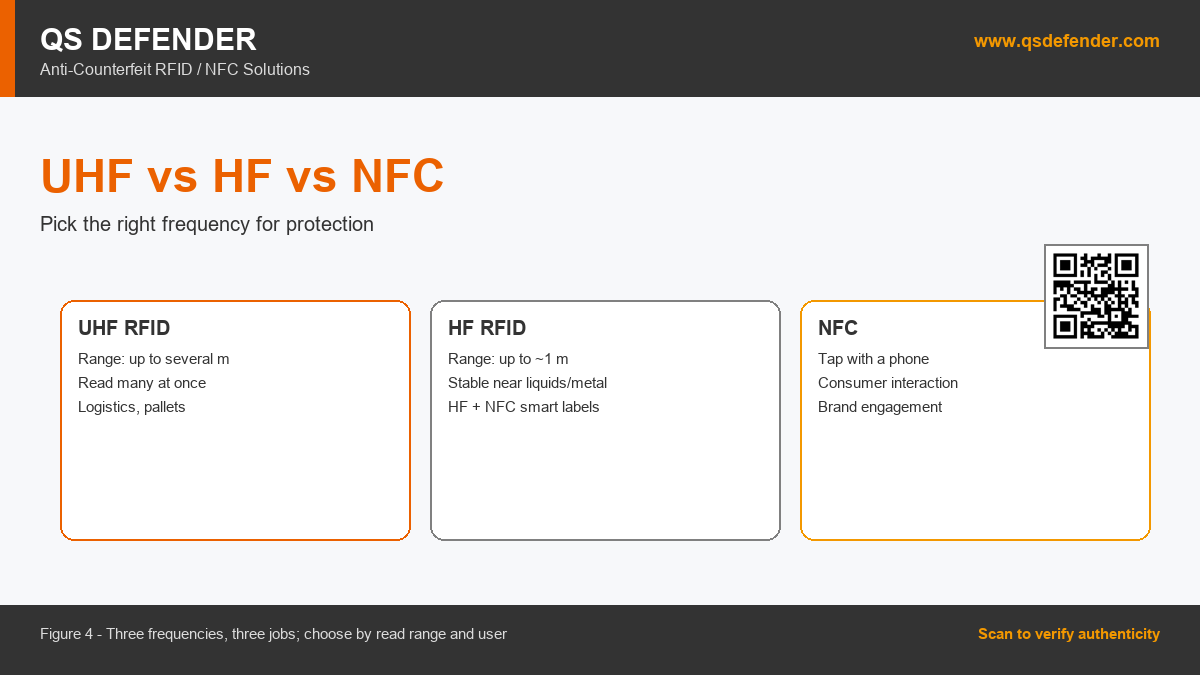
UHF RFID
Long read range — up to several meters — and the ability to read hundreds of tags at once without line of sight. This is the workhorse of warehouses and pallet-level logistics, where speed and bulk reads matter more than a close-up tap.
HF RFID
Short range (up to about one meter) and notably more stable near liquids and metal than UHF. HF is the backbone of most smart labels, and NFC is simply a phone-friendly slice of the HF band built for tap interactions.
NFC
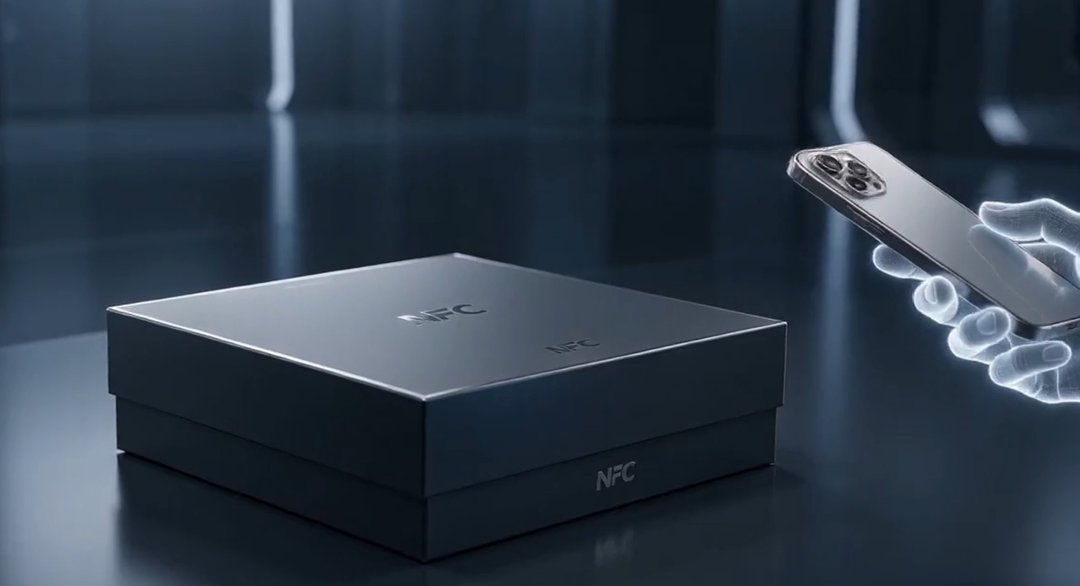
A consumer taps an NFC tag with a modern smartphone and a URL or record opens in the browser — usually with no app to install. NFC turns the pack into a direct, two-way channel between the brand and the buyer.
UHF vs HF vs NFC: The Comparison
| Property | UHF RFID | HF / NFC | What it means for you |
|---|---|---|---|
| Read range | Several meters | Up to ~1 m (NFC ~4 cm) | UHF for distance, NFC for tap |
| Bulk reads | Hundreds at once | One item at a time | UHF wins in logistics |
| Near metal / liquid | Weaker | More stable | HF/NFC better on tough products |
| Consumer phone | Needs a reader | Native tap | NFC engages buyers directly |
| Per-inlay cost | Low at volume | Low to mid | Same order of magnitude |
How to Choose by Job, Not by Spec
Logistics & inventory
Choose UHF when you must read cases on a pallet without line of sight and at gate speed. It is the right tool for warehouses, distribution, and outbound verification.
Product + consumer
Choose HF/NFC when a phone or handheld reads one item at a time, or when tap-to-verify and brand engagement are part of the experience. NFC is what makes a pack "talk back" in a store.
A layered program
Many brands use UHF at the warehouse and NFC at the shelf, with the same backend logging both. You do not have to choose one forever — you match the frequency to the workflow.
Match the frequency to the workflow first
Decide where the scan happens — dock door, retail shelf, or consumer phone — before you specify the chip. The right frequency is the one your reader and your user actually meet at, not the one with the biggest number on a datasheet.

Generated from http://www.qsdefender.com/ — point it at your product verification URL in production.
Frequently Asked Questions
Can one product use more than one frequency?
Yes. A common pattern is UHF for inbound logistics and NFC for consumer engagement, with both linked to the same verification record so the whole journey is traceable.
Does NFC need an app to work?
Usually no. Most modern phones open an NFC tag's URL or record in the native browser, so a tap can land the user on a verification page without installing anything.
Will metal or liquid products block UHF?
They can. HF/NFC is generally more stable near these materials, and on-metal UHF inlays exist for tough cases. Tell your supplier the product material up front so they specify the right inlay.
Next Steps
Explore the full Anti-Counterfeiting Technology line, read our RFID/NFC buyer's guide for chip selection, or send an inquiry / contact us for a sample of UHF, HF, and NFC label constructions. Browse anti-counterfeit labels and tags →